Special Focus

AWID is an international, feminist, membership organisation committed to achieving gender equality, sustainable development and women’s human rights

Confronting Extractivism & Corporate Power

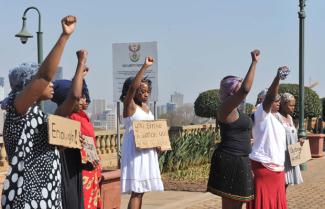
Women human rights defenders (WHRDs) worldwide defend their lands, livelihoods and communities from extractive industries and corporate power. They stand against powerful economic and political interests driving land theft, displacement of communities, loss of livelihoods, and environmental degradation.


Why resist extractive industries?

Extractivism is an economic and political model of development that commodifies nature and prioritizes profit over human rights and the environment. Rooted in colonial history, it reinforces social and economic inequalities locally and globally. Often, Black, rural and Indigenous women are the most affected by extractivism, and are largely excluded from decision-making. Defying these patriarchal and neo-colonial forces, women rise in defense of rights, lands, people and nature.

Critical risks and gender-specific violence

WHRDs confronting extractive industries experience a range of risks, threats and violations, including criminalization, stigmatization, violence and intimidation.  Their stories reveal a strong aspect of gendered and sexualized violence. Perpetrators include state and local authorities, corporations, police, military, paramilitary and private security forces, and at times their own communities.

Acting together

AWID and the Women Human Rights Defenders International Coalition (WHRD-IC) are pleased to announce “Women Human Rights Defenders Confronting Extractivism and Corporate Power”; a cross-regional research project documenting the lived experiences of WHRDs from Asia, Africa and Latin America.

We encourage activists, members of social movements, organized civil society, donors and policy makers to read and use these products for advocacy, education and inspiration.

Share your experience and questions!

Tell us how you are using the resources on WHRDs Confronting extractivism and corporate power.

◾️ How can these resources support your activism and advocacy?

◾️ What additional information or knowledge do you need to make the best use of these resources?

Share your feedback


Thank you!

AWID acknowledges with gratitude the invaluable input of every Woman Human Rights Defender who participated in this project. This project was made possible thanks to your willingness to generously and openly share your experiences and learnings. Your courage, creativity and resilience is an inspiration for us all. Thank you!
Related Content

Будет ли у меня возможность поделиться мыслями по вопросам, которые не учтены в опросе?

Да, в конце опроса мы попросим вас поделиться более подробной информацией по важным для вас аспектам, ответив на открытые вопросы.

L’économie solidaire

Définition

L'économie solidaire (qui inclut l'économie coopérative et l’économie du don) est un cadre alternatif qui adopte différentes formes dans divers contextes et qui est ouvert au changement continuel.

Ce cadre est fondé sur les principes suivants :

  • la solidarité, l’entraide et la coopération
  • l'équité dans toutes les dimensions
  • le bien-être social
  • la durabilité
  • la démocratie sociale et économique
  • le pluralisme

Dans une économie solidaire, les producteurs mettent en place des processus économiques qui sont intimement liés à leurs réalités, à la préservation de l'environnement et à la coopération mutuelle.

Le contexte

Selon la géographe féministe Yvonne Underhill-Sem, l'économie du don est un système économique dans lequel les biens et les services circulent entre les personnes sans accord explicite de leur valeur, ou sans impliquer de réciprocité ultérieure.

Derrière le don il y a la relation humaine, la bienveillance et l'attention portée à la nurturance* de toute la société, non seulement limitée à soi-même et aux proches. Il s’agit ici de la notion du collectif.

Par exemple, dans la région du Pacifique, cette approche comprend la collecte, la préparation et le tissage de ressources terrestres et marines pour fabriquer des tapis, des ventilateurs, des guirlandes et des objets de cérémonie. Elle comprend également l'élevage du bétail et le stockage des récoltes saisonnières.

Perspective féministe

Pour les femmes, les incitations à s’engager dans des activités économiques sont diverses et multiples, allant de la réalisation d’aspirations de carrière afin de gagner de l'argent pour une vie confortable à long terme, à gagner de l'argent pour joindre les deux bouts, à rembourser une dette ou encore à échapper aux corvées de la vie courante.

Pour s’adapter aux divers environnements au sein desquels les femmes travaillent, le concept d'économie solidaire est en développement permanent et est continuellement discuté et débattu.


Pour en savoir plus sur cette proposition :

Glossaire :

Nurturance : Nourriture et soins émotionnels et physiques donnés à quelqu'un.

Snippet FEA Financial Precarities (EN)

This image represents a faceless person with dark hair, yellow glasses, and V-neck navy blue colored shirt that is writing on a burgundy piece of paper with a yellow pencil
FINANCIAL PRECARITIES
is constant

Paula Andrea Rosero Ordóñez

“[She] was a person who was characterized by her hard work in favor of the defense of human rights and the construction of peace in Nariño, especially in the municipality of Samaniego-Nariño.”
- Jorge Luis Congacha Yunda for Página10

Paula Andrea Rosero Ordóñez was a trial lawyer in the office of the Public Ministry in Samaniego, Nariño, the main agency defending citizens’ rights in Colombia.

She focused on civil and political rights, issues of impunity and justice, and contributed to uncovering the abuse of power, including corruption. She also participated in peacebuilding projects in her hometown Samaniego, such as the Municipal Peace Council and the Municipal Women’s Board. 

Paula received death threats after exposing the irregular handling of resources and complaining about acts of corruption at the Lorencita Villegas Hospital in the Nariñense municipality. She was murdered on 20 May 2019, when two men approached and shot her at close range. 

Body

Como é que os dados recolhidos através do questionário serão divulgados e processados?

Os dados serão processados para fins estatísticos para esclarecer o estado de financiamento dos movimentos feministas globalmente e serão divulgados apenas em forma agregada. A AWID não divulgará informações sobre uma organização específica ou informações que permitam identificar uma organização através da respetiva localização ou características sem o respetivo consentimento comprovado.

Feminist propositions: Glossary of terms

Capitalism:

An economic system in which production and consumption patterns are based on profit using privately owned capital goods and wage labour. The system builds on individual wealth and capital accumulation at the lowest cost to the investor, with little regard for the societal costs and exploitation of the workforce - both paid and unpaid.

Commodification of land:

The conversion of land and activities related to it (like agriculture) into commodities that can be bought or sold for profit.

International Financial Institutions (IFIs):

Institutions (like the World Bank, International Monetary Fund, or regional development banks) that provide loans to countries lacking sufficient money to cover funding shortfalls or to finance development projects. Historically, the lending policies of these institutions have been determined by economically powerful Western countries and private enterprises. Loans to low-income countries in particular typically include conditionalities that prompt economic reforms in these countries to support neo-liberalism.

Neoliberalism:

A set of economic and political theories in which market forces, rather than governments, determine key aspects of the economy with governments acting to support globalized markets and the interests of capital. Neo-liberal economic policies typically include promotion of free trade, privatisation, reduced government spending on social programs, subsidies and tax exemptions for business, deregulation of financial sector and foreign investments, low taxes on the wealthy and corporations, flexible labour and weak environmental protection.

Patriarchy:

Refers to systemic and institutionalized male domination embedded in and perpetuated by cultural, political, economic and social structures and ideologies. Hetero-patriarchy in addition, is a patriarchal system that is also based on the belief that heterosexuality is the only normal and acceptable sexual orientation.

Snippet FEA Get Involved Story 3 (ES)

¡INVOLÚCRATE!

¡Sigue el trabajo de la cooperativa en Facebook e Instagram, comparte sus campañas y mantente al tanto de sus acciones y eventos de recaudación de fondos!

Carol Thomas

Carol Thomas fue una pionera en el trabajo por los derechos sexuales y reproductivos de las mujeres en Sudáfrica. Fue una ginecóloga de gran talento y la fundadora del WomenSpace [EspacioDeMujeres].

No sólo las empleó en su práctica, sino que también abogó por proporcionar formas no tradicionales de asistencia sanitaria a las mujeres, ofreciendo servicios de alta calidad, empáticos y accesibles.

"Ella recibió no sólo la alegría de los embarazos y la llegada de nuevxs bebés, sino también la ansiedad que puede generar la infertilidad, un parto prematuro, el cáncer femenino, así como también la angustia de los abortos espontáneos y lxs mortinatxs". Helen Moffett

Carol pensó en nuevos paradigmas cuyo centro de atención fuesen las necesidades de las mujeres con menor acceso a los servicios y derechos que puede aportar una sociedad:

"El entorno socioeconómico imperante en el que nos encontramos hoy se traduce en una carga desproporcionada de enfermedades y desempleo que las mujeres tienen que soportar... Como mujer negra, desfavorecida en el pasado, tengo una idea clara de lo que está sucediendo en nuestras comunidades". - Carol Thomas

La innovadora y multipremiada empresa social de Carol, "“iMobiMaMa”, utilizaba los quioscos móviles y la tecnología interactiva para conectar directamente a las mujeres con servicios de salud prenatal y reproductiva, información y apoyo en  las comunidades de toda Sudáfrica. 

Carol apoyó a las mujeres tanto en los embarazos deseados como en los no deseados, y fue mentora de muchxs enfermerxs y doctorxs a lo largo de su vida.

Fue calificada, además, como ginecóloga de referencia "para las personas trans que podían recibir de ella una atención afirmativa. Ella supo cómo manejarse cuando muchas personas no tenían todavía en claro el lenguaje o los pronombres. Sus mantas calientes, su capacidad para escuchar y decir lo que necesitabas oír eran muy reconfortantes." -Marion Lynn Stevens.

Carol Thomas falleció el 12 de abril de 2019 a causa de una serie de complicaciones tras un doble trasplante de pulmón, en el punto más álgido de su carrera profesional.

Los homenajes que llegaron después de su muerte inesperada se refieren a ella de muchas formas: como " modelo a seguir, mujer guerrera, innovadora, líder dinámica, rompe-moldes, dínamo, científica brillante, doctora compasiva".

Sin duda, Carol Thomas será recordada y honrada por ser todo esto y mucho más.

حالة التمويل للحركات النسوية ووقائعها تتغير بسرعة. هل هذا الاستطلاع لمرة واحدة؟

كلا. يبني هذا الاستطلاع على المعلومات التي حشدتها جمعية حقوق المرأة في التنمية حول كيفية الحصول على تمويل أكبر وأفضل للحركات النسوية وحركات التغيير الاجتماعي وهذه الدورة الثالثة لاستطلاع "أين التمويل للتنظيمات النسوية". نهدف للقيام بالاستطلاع مرة كل ثلاثة أعوام.

Key opposition actors

We are witnessing an unprecedented level of engagement of anti-rights actors in international human rights spaces. To bolster their impact and amplify their voices, anti-rights actors increasingly engage in tactical alliance building across sectors, regional and national borders, and faiths.


This “unholy alliance” of traditionalist actors from Catholic, Evangelical, Mormon, Russian Orthodox and Muslim faith backgrounds have found common cause in a number of shared talking points and advocacy efforts attempting to push back against feminist and sexual rights gains at the international level.

Holy See

  • Key activities: As the government of the Roman Catholic Church, the “Holy See” uses its unique status as Permanent Observer state at the UN to lobby for conservative, patriarchal, and heteronormative notions of womanhood, gender identities and “the family”, and to propagate policies that are anti-abortion and -contraception  

  • Based in: Vatican City, Rome, Italy.

  • Religious affiliations: Catholic

  • Connections to other anti-rights actors: US Christian Right groups; interfaith orthodox alliances; Catholic CSOs

Organization of Islamic Cooperation (OIC)

  • Key activities: Self-described as the “collective voice of the Muslim world”, the OIC acts as a bloc of states in UN spaces. The OIC attempts to create loopholes in human rights protection through references to religion, culture, or national sovereignty; propagates the concept of the “traditional family”; and contributes to a parallel but restrictive human rights regime (e.g. the 1990 Cairo Declaration on Human Rights in Islam).

  • Based in: Jeddah, Saudi Arabia

  • Religious affiliations: Muslim

  • Connections to other anti-rights actors: Ultra conservative State missions to the UN, such as Russia

World Congress of Families

  • Key activities: International and regional conferences; research and knowledge-production and dissemination; lobbying at the United Nations “to defend life, faith and family”

  • Based in: Rockford, Illinois, U.S.

  • Religious affiliation: Predominantly Catholic and Christian Evangelical

  • Connections to other anti-rights actors: Sutherland Institute, a conservative think-tank; the Church of Latter-Day Saints; the Russian Orthodox Church’s Department of Family and Life; the anti-abortion Catholic Priests for Life; the Foundation for African Culture and Heritage; the Polish Federation of Pro-Life Movements; the European Federation of Catholic Family Associations; the UN NGO Committee on the Family; and the Political Network for Values; the Georgian Demographic Society; parliamentarians from Poland and Moldova, etc; FamilyPolicy; the Russian Institute for Strategic Studies; and HatzeOir; C-Fam; among others

Center for Family and Human Rights (C-Fam)

  • Key activities: Lobbying at the United Nations, particularly the Commission of the Status of Women to “defend life and family”; media and information-dissemination (Friday Fax newsletter); movement building; trainings for conservative activists

  • Based in: New York and Washington D.C., U.S.

  • Religious affiliations: Catholic

  • Connections to other anti-rights actors: International Youth Coalition; World Youth Alliance; Human Life International; the Holy See; coordinates the Civil Society for the Family; the Family Research Council (U.S.) and other Christian/Catholic anti-rights CSOs; United States CSW delegation

Family Watch International

  • Key activities: Lobbying in international human rights spaces for “the family” and anti-LGBTQ and anti-CSE policies; training of civil society and state delegates (for example, ‘The Resource Guide to UN Consensus Language on Family Issues’); information dissemination; knowledge production and analysis; online campaigns

  • Based in: Gilbert, Arizona, U.S.

  • Religious affiliations: Mormon

  • Connections to other anti-rights actors: leader of the UN Family Rights Caucus; C-Fam; Jews Offering New Alternatives to Homosexuality (JONAH); the National Association for Research and Therapy of Homosexuality (NARTH); World Congress of Families; CitizenGo; Magdalen Institute; Asociación La Familia Importa; Group of Friends of the Family (25 state bloc)

World Youth Alliance

  • Key activities: Advocacy in international policy spaces including the United Nations, the European Union, and the Organization of American States for “the family”, against sexual and reproductive rights; training youth members in the use of diplomacy and negotiation, international relations, grassroots activities and message development; internship program to encourage youth participation in its work; regular Emerging Leaders Conference; knowledge production and dissemination

  • Based in: New York City (U.S.) with regional chapter offices in Nairobi (Kenya), Quezon City (The Philippines), Brussels (Belgium), Mexico City (Mexico), and Beirut (Lebanon)

  • Religious affiliations: primarily Catholic but aims for interfaith membership

  • Connections to other anti-rights actors: C-Fam; Human Life International; the Holy See; Campaign Life coalition

Russian Orthodox Church

  • Key Activities: The Russian Orthodox Church (ROC), capitalizing on its close links to the Russian state, has operated as a “norm entrepreneur” in human rights debates.  Russia and the ROC have co-opted rights language to push for a focus on “morality” and “traditional values”  as supposed key sources of human rights.  Russia led a series of “traditional values” resolutions at the Human Rights Council and has been at the forefront of putting forward hostile amendments to progressive resolutions in areas including maternal mortality, protection of civil society space, and the right to peaceful protest.

  • Connections to other anti-rights actors: Organization of Islamic Cooperation; Eastern European and Caucasus Orthodox churches, e.g. Georgian Orthodox Church; U.S. Christian Right including U.S. Evangelicals; World Congress of Families; Group of Friends of the Family (state bloc)


Other Chapters

Read the full report

Snippet FEA Who takes care of them S4 (FR)

...QUI PREND SOIN D'ELLEUX?

Mereani Naisua Senibici

Mereani Naisua Senebici, que l’on appelait aussi « Sua », a été membre de l’Association des jeunes femmes chrétiennes (YWCA) des Fidji pendant de longues années.

En plus d’avoir travaillé avec divers groupes de femmes dans des contextes multiraciaux, ruraux et urbains, elle s’est impliquée dans le soutien et la promotion des droits des femmes et des jeunes femmes.

Au YWCA de Lautoka, elle travaillait avec des femmes d’origine indienne et comptait parmi les pionnières du développement de la pratique sportive et la participation des femmes et athlètes trans localement.

« Les membres du YWCA des Fidji ont profondément aimé Sua pour son dévouement et son soutien inébranlable envers tous les efforts déployés par l’organisation » – Tupou Vere

Mereani faisait partie de la House of Sarah (HoS), une initiative de l’Association of Anglican Women (AAW) lancée en 2009, un organisme de sensibilisation autour des violences basées sur le genre et de soutien des femmes victimes de violence. Ayant commencé sa pratique en tant que bénévole dévouée, elle offrait notamment son soutien aux femmes dans tout le Pacifique.
Mereani s’est éteinte en 2019.

« Une personne qui aimait les gens, qui était présente sur tous les fronts de l’autonomisation des femmes et du travail du mouvement au niveau communautaire. Repose en paix, Sua. » – Tupou Vere

Snippet - WITM Who should - PT

Quem deve realizar este inquérito?

O inquérito destina-se a grupos, organizações e movimentos que trabalham especificamente ou principalmente pelos direitos das mulheres, pessoas LBTQI+ e pela justiça de género, em todos os contextos, em todos os níveis e em todas as regiões. Se este for um dos pilares principais do seu grupo, da sua comunidade, da sua rede ou de qualquer outro tipo de organização, quer esteja registada ou não, seja nova ou já estabelecida, convidamo-lo a participar neste inquérito.

* De momento, não solicitamos respostas de indivídues ou de fundos feministas e de mulheres.

Perguntas Frequentes