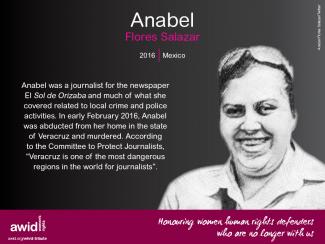
Anabel Flores Salazar
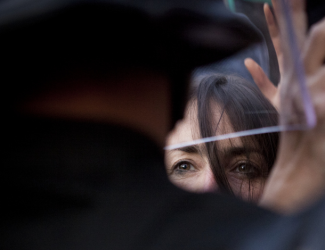
WHRDs are self-identified women and lesbian, bisexual, transgender, queer and intersex (LBTQI) people and others who defend rights and are subject to gender-specific risks and threats due to their human rights work and/or as a direct consequence of their gender identity or sexual orientation.
WHRDs are subject to systematic violence and discrimination due to their identities and unyielding struggles for rights, equality and justice.
The WHRD Program collaborates with international and regional partners as well as the AWID membership to raise awareness about these risks and threats, advocate for feminist and holistic measures of protection and safety, and actively promote a culture of self-care and collective well being in our movements.
WHRDs are exposed to the same types of risks that all other defenders who defend human rights, communities, and the environment face. However, they are also exposed to gender-based violence and gender-specific risks because they challenge existing gender norms within their communities and societies.
We work collaboratively with international and regional networks and our membership
We aim to contribute to a safer world for WHRDs, their families and communities. We believe that action for rights and justice should not put WHRDs at risk; it should be appreciated and celebrated.
Promoting collaboration and coordination among human rights and women’s rights organizations at the international level to strengthen responses concerning safety and wellbeing of WHRDs.
Supporting regional networks of WHRDs and their organizations, such as the Mesoamerican Initiative for WHRDs and the WHRD Middle East and North Africa Coalition, in promoting and strengthening collective action for protection - emphasizing the establishment of solidarity and protection networks, the promotion of self-care, and advocacy and mobilization for the safety of WHRDs;
Increasing the visibility and recognition of WHRDs and their struggles, as well as the risks that they encounter by documenting the attacks that they face, and researching, producing, and disseminating information on their struggles, strategies, and challenges:
Mobilizing urgent responses of international solidarity for WHRDs at risk through our international and regional networks, and our active membership.
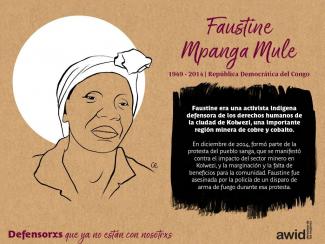
She was born in Bahia, the Northeastern part of Brazil. She is an immigrant, a social activist and a mother of 8 children.
Carmen experienced homelessness at the age of 35, after migrating to Sao Paulo on her own. This led her to become a fierce advocate for vulnerable, marginalized and invisibilized communities most affected by the housing crisis. She eventually became one of the founders of MSTC in 2000.
As a visionary political organizer and the current leader of the MSTC, Carmen’s work has laid bare the city's housing crisis and provided inspiration to others on different ways to organize and manage occupations. She stood strong on the forefront of several occupations. One of them is the 9 de Julho Occupation, which now serves as a stage for direct democracy, and a space where everyone can be heard, seen, appreciated and work together.
Carmen has been long celebrated for her boldness in giving life back to abandoned buildings in the heart of São Paulo.
To know more about her life, you can follow her on Instagram!
Sessions de consultation complémentaires sur la version préliminaire du document final
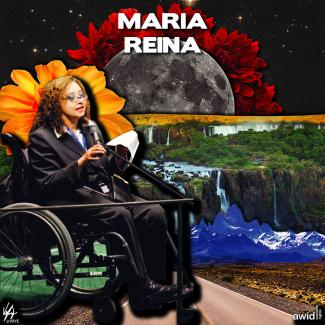
She represented the International Disability and Development Consortium during the negotiation of the United Nations Convention on the Rights of Persons with Disabilities (2001-2006).
Her work was devoted to the implementation of the goal of the Convention - realization of universal human rights by, for and with persons with disabilities for an inclusive, accessible and sustainable world.
In her words, her leadership was about “...serving the disability community, starting with small tasks that others may not wish to do”.
She passed away on October 27, 2017 in her hometown of Rosario, Argentina.
Read more about María Verónica Reina in her own words
‘A geopolitical Analysis of Financing for Development’ by Regions Refocus 2015 and Third World Network (TWN) with DAWN.
The Zero Draft Language Map, by Regions Refocus
‘Addis Ababa financing conference: Will the means undermine the goals?‘ by RightingFinance
Metzineres
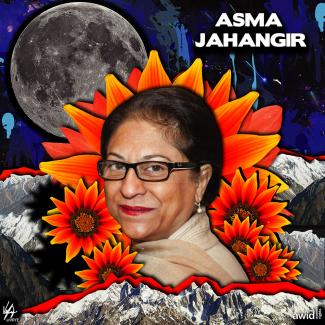
Asma fue una destacada activista pakistaní por los derechos humanos, valiente crítica de la interferencia de los militares en la política, y firme defensora del estado de derecho.
Fue la fundadora y presidenta de la Human Rights Commission of Pakistan [Comisión de Derechos Humanos de Pakistán, un grupo independiente], y una de las administradoras del International Crisis Group. Obtuvo premios internacionales, y fue Relatora Especial de Naciones Unidas sobre derechos humanos y ejecuciones extrajudiciales.
Es recordada con afecto por sus colegas y amigxs de AWID
«Con su vida, Asma reescribió la historia que a muchas nos contaron, como mujeres. Asma cambió el mundo. Lo cambió en Pakistán, y lo cambió en nuestras imaginaciones.»
Como expresión de nuestro compromiso con hacer que todos los aspectos del Foro AWID sean accesibles, aceptaremos propuestas en forma de audio/video cuando se trate de personas/organizaciones/grupos que no puedan enviarlas por escrito. Si decides enviar tu propuesta en formato de audio/video, por favor responde las preguntas en el mismo orden en que aparecen en el Formulario para Presentar Actividades.
Para presentar un archivo de audio/video, por favor escríbenos utilizando nuestro formulario de contacto. Seleccione «propuesta de actividad» como asunto de mensaje.
Care as the foundation of economies
The COVID-19 pandemic put the global crisis of care into sharp focus and demonstrated the failures of the dominant economic model that is decimating essential public services, social infrastructures and systems of care around the world.
Cozinha Ocupação 9 Julho, the Association of Afro-Descendant Women of the Northern Cauca (ASOM) and Metzineres are only some examples of caring economies that center the needs of marginalized people and nature, as well as the reproductive, invisibilized, and unpaid care work required to ensure the sustainability of our lives, societies and eco-systems.
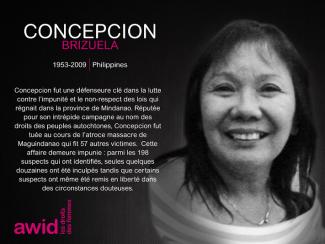
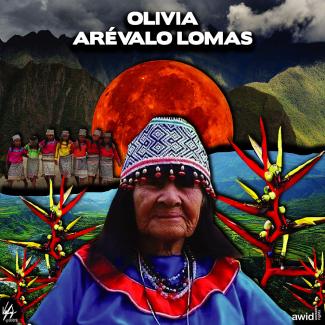
Olivia était la cheffe spirituelle des peuples autochtones Shipibo Konibo.
Sage femme et grand-mère autochtone, elle était connue pour sa préservation de la médecine traditionnelle et des chants sacrés de son peuple (les íkaros). Olivia Arévalo était une défenseure engagée en faveur des droits culturels et environnementaux de son peuple. L’assassinat d’Olivia s’est produit dans un contexte de conflit territorial entre la communauté Shipibo et les entreprises qui souhaitent s’accaparer leurs terres pour cultiver de l’huile de palme.
Les membres de sa communauté ont déclaré: « Sa mort est une agression contre toute la communauté Shipibo. Elle était la mémoire vivante de son peuple ».
Sí, por favor. El mundo ha cambiado desde 2021, y te invitamos a proponer una actividad que refleje tus realidades y prioridades actuales.