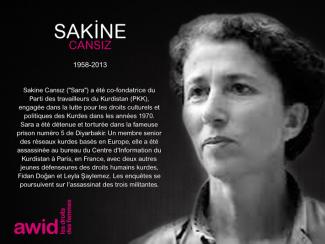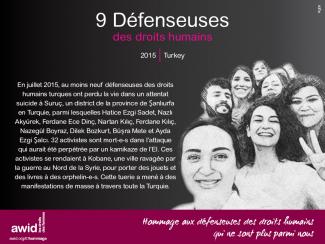
9 Défenseuses
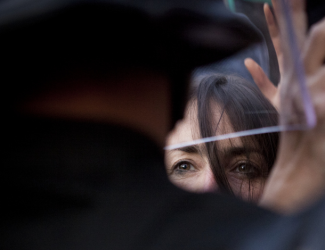
WHRDs are self-identified women and lesbian, bisexual, transgender, queer and intersex (LBTQI) people and others who defend rights and are subject to gender-specific risks and threats due to their human rights work and/or as a direct consequence of their gender identity or sexual orientation.
WHRDs are subject to systematic violence and discrimination due to their identities and unyielding struggles for rights, equality and justice.
The WHRD Program collaborates with international and regional partners as well as the AWID membership to raise awareness about these risks and threats, advocate for feminist and holistic measures of protection and safety, and actively promote a culture of self-care and collective well being in our movements.
WHRDs are exposed to the same types of risks that all other defenders who defend human rights, communities, and the environment face. However, they are also exposed to gender-based violence and gender-specific risks because they challenge existing gender norms within their communities and societies.
We work collaboratively with international and regional networks and our membership
We aim to contribute to a safer world for WHRDs, their families and communities. We believe that action for rights and justice should not put WHRDs at risk; it should be appreciated and celebrated.
Promoting collaboration and coordination among human rights and women’s rights organizations at the international level to strengthen responses concerning safety and wellbeing of WHRDs.
Supporting regional networks of WHRDs and their organizations, such as the Mesoamerican Initiative for WHRDs and the WHRD Middle East and North Africa Coalition, in promoting and strengthening collective action for protection - emphasizing the establishment of solidarity and protection networks, the promotion of self-care, and advocacy and mobilization for the safety of WHRDs;
Increasing the visibility and recognition of WHRDs and their struggles, as well as the risks that they encounter by documenting the attacks that they face, and researching, producing, and disseminating information on their struggles, strategies, and challenges:
Mobilizing urgent responses of international solidarity for WHRDs at risk through our international and regional networks, and our active membership.
This journal edition in partnership with Kohl: a Journal for Body and Gender Research, will explore feminist solutions, proposals and realities for transforming our current world, our bodies and our sexualities.
Margarita es una feminista y activista por los derechos de las personas LGBTIQA de América Latina. Sus pasiones son la transformación social y el bienestar colectivo. Posee títulos en Psicología, Comunicaciones y Administración Pública, y varias certificaciones en Política Pública, Liderazgo, Gestión y Toma de Decisiones. Como profesional, ha tenido una dilatada experiencia con organizaciones de base, ONG nacionales y regionales, universidades y el sector público, en los que se ha abocado a la facilitación, la capacitación, la incidencia política, las comunicaciones y la evaluación de políticas.
Ces informations sont disponibles dans notre Appel à activités, et notamment sa section intitulée « Ce qu’il faut savoir ».

مريم مكيوي مخرجة أفلام ومصورة من الإسكندرية تعيش وتعمل في برلين.
Sara AbuGhazal est une féministe palestinienne vivant à Beyrouth. Elle est Co-fondatrice de Sawt al-Niswa, un collectif qui produit des connaissances à Beyrouth. Elle est co-directrice de The Knowledge Workshop, une organisation féministe basée à Beyrouth qui travaille sur l'histoire orale et l'archivage féministes. Sara est actuellement coordonnatrice régionale de la Regional Coalition for Women Human Rights Defenders in the Middle East and North Africa.
Sara s'efforce de contribuer à la création d'espaces de transformation et de solidarité féministes. Son travail est principalement axé sur la création de mouvements durables dans la région Moyen-Orient et de l'Afrique du Nord Elle est investie dans la production de connaissances, la transformation féministe et la Palestine. Elle publie régulièrement dans sawtalniswa.org et ses œuvres de fiction apparaissent également dans le magazine électronique Romman
Lo voy a admitir: cuando Angélica y Fabi me invitaron a ser curadora de una colección de textos eróticos de mujeres negras, no sabía qué era la curaduría. Entendía bien lo erótico, pero la curaduría…
Juhi is a tech enthusiast with a Bachelor's degree in Computer Engineering from Gujarat Technological University and a postgraduate background in Wireless Telecommunications and Project Management from Humber College. With a passion for problem-solving and a love for staying ahead in the ever-evolving tech landscape, Juhi has found herself navigating through various industries as an IT Technician. to the nurturing environment of the School Board, Juhi has had the opportunity to apply her technical skills in diverse settings, always embracing new challenges with enthusiasm. Beyond the code and circuits, Juhi loves life's adventures. Exploring new places and cultures is like a breath of fresh air to her. Whether it's discovering hidden gems in the city, trying out exotic cuisines, or embarking on thrilling adventure sports, Juhi is always up for new experiences.
Los hospitales son instituciones, espacios vivientes del capitalismo, y lo que se manifiesta cuando alguien está supuestamente haciendo reposo allí es un microcosmos del sistema en que vivimos.

Patience es profesional global en recursos humanos y ha acumulado más de 10 años de experiencia en la gestión de recursos humanos (RRHH) en el sector sin fines de lucro. Anteriormente, trabajó en Mercy Corps como Oficial Global de Recursos Humanos para África, donde brindaba apoyo en todo lo concerniente al ciclo de vida del personal para personas expatriadas en la región de África oriental y meridional, y brindaba orientación técnica en recursos humanos a les encargades de recursos humanos en las oficinas nacionales de la región africana. Antes de sumarse al equipo global de personal, se desempeñaba como Punto Focal Nacional de Recursos Humanos y Salvaguardia, formó parte del equipo de gestión superior encargado de dirigir todos los asuntos de recursos humanos y salvaguardia. Antes de Mercy Corps, dirigió el Departamento de Recursos Humanos y Operaciones de SNV Netherlands Development Organization e integró el equipo de gestión nacional. Asimismo, posee experiencia de consultoría en Recursos Humanos que adquirió mientras estudiaba para su licenciatura en Gestión de Recursos Humanos que terminó con honores. Es una apasionada de la gestión de recursos humanos, le encanta trabajar con la gente y tiene al bienestar y la salvaguardia como sus valores fundamentales, los que aplica en su vida profesional. Por su pasión por los deportes, también se puede encontrar a Patience en un estadio de baloncesto, de tenis o de fútbol.
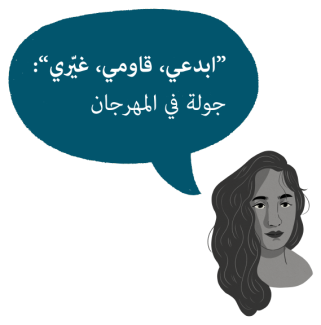
غوى صايغ كاتبة كويرية آناركية، وناشرة مستقلة ومؤرشفة. هي المحرّرة المؤسِّسة لمجلّة “كحل” ومؤسِّسة شريكة لـ”منشورات المعرفة التقاطعية”. حصلت على ماجستير في الدراسات الجندرية من جامعة باريس 8 فينسين - سانت دينيس. إنها شغوفة بنظرية الكوير، والمنشورات الدورية العابرة للحدود القومية، والتاريخ المتخيل أو المجهول. أودري لورد وسارة أحمد هما ملهمتاها.
Tout au long de ses 38 années de carrière, Debbie Stothard a collaboré avec diverses communautés pour impliquer des États, des organisations intergouvernementales et autres parties prenantes en Asie, en Afrique, en Europe et dans les Amériques sur des questions de droits humains et de justice. Son travail porte essentiellement sur les thématiques des affaires et des droits humains, de la prévention des atrocités et du leadership des femmes. Elle a, de ce fait, animé ou secondé près de 300 formations au cours des 15 dernières années. La plupart de ces formations était des ateliers à destination de groupes de base et organisés sur le terrain, centrés sur le plaidoyer en faveur des droits humains, les connaissances économiques fondamentales, les affaires et les droits humains, la justice transitionnelle et la prévention des atrocités. Son travail dans le domaine de la justice transitionnelle et de la prévention des atrocités s’est principalement déroulé au Myanmar, mais elle a également été conseillère en matière d’interventions dans d’autres situations nationales dans le monde.
Entre 1981 et 1996, Debbie a été reporter spécialisée dans les affaires criminelles, organisatrice d’évènements étudiants, analyste politique, universitaire, conseillère gouvernementale et traiteure en Malaisie et en Australie, tout en étant bénévole pour des causes en lien avec les droits humains. Elle a fondé ALTSEAN-Burma en 1996, qui fut à l’initiative d’un large éventail de programmes sur les droits humains à la fois innovants et autonomisants. ALTSEAN mène notamment un programme permanent et intensif de leadership à destination de diverses jeunes femmes à Burma qui, au cours des 22 dernières années, a aidé à renforcer et élargir le leadership des femmes dans les zones touchées par un conflit. Debbie Stothard a siégé au Conseil de la fédération internationale des droits humains (FIDH) pendant neuf années en sa qualité de secrétaire générale adjointe (2010–2013) puis de secrétaire générale (2013–2019). Elle a mis cette période à profit en promouvant la mission et le profil de la FIDH lors de près de 100 réunions et conférences par année.

تشينيلو أونوالو، مستشارة في الشؤون التحرِيرية، مع 10 سنوات من الخبرة في صياغة الاتصالات الاستراتيجية للمنظمات غير الربحية في جميع أنحاء العالم. من بين عملائها منظمة ActionAid Nigeria و BBC World Trust و Open Society Initiative for West Africa و AWID. حائزة على درجة الماجستير في الصحافة من جامعة سيراكيوز. عملت كاتبة ومحررة وباحثة في نيجيريا وكندا والولايات المتحدة. وهي أيضًا محررة في مجلة Anathema والمؤسس المشارك في Omenana، وهي مجلة من قصص الخيال الأفريقي. ظهرت قصصها القصيرة في العديد من المختارات الحائزة على جوائز، ورُشّحت لجوائز الخيال العلمي البريطانية، وجوائز نومو للخيال الأفريقي المضارب، وجائزة يوم القصة الافريقية القصيرة. تشينيلو من نيجيريا لكنها تعيش في تورنتو مع شريكها وطفلها.