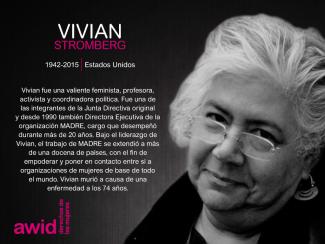
Vivian Stromberg
Over the past few years, a troubling new trend at the international human rights level is being observed, where discourses on ‘protecting the family’ are being employed to defend violations committed against family members, to bolster and justify impunity, and to restrict equal rights within and to family life.
The campaign to "Protect the Family" is driven by ultra-conservative efforts to impose "traditional" and patriarchal interpretations of the family, and to move rights out of the hands of family members and into the institution of ‘the family’.
Since 2014, a group of states have been operating as a bloc in human rights spaces under the name “Group of Friends of the Family”, and resolutions on “Protection of the Family” have been successfully passed every year since 2014.
This agenda has spread beyond the Human Rights Council. We have seen regressive language on “the family” being introduced at the Commission on the Status of Women, and attempts made to introduce it in negotiations on the Sustainable Development Goals.
AWID works with partners and allies to jointly resist “Protection of the Family” and other regressive agendas, and to uphold the universality of human rights.
In response to the increased influence of regressive actors in human rights spaces, AWID joined allies to form the Observatory on the Universality of Rights (OURs). OURs is a collaborative project that monitors, analyzes, and shares information on anti-rights initiatives like “Protection of the Family”.
Rights at Risk, the first OURs report, charts a map of the actors making up the global anti-rights lobby, identifies their key discourses and strategies, and the effect they are having on our human rights.
The report outlines “Protection of the Family” as an agenda that has fostered collaboration across a broad range of regressive actors at the UN. It describes it as: “a strategic framework that houses “multiple patriarchal and anti-rights positions, where the framework, in turn, aims to justify and institutionalize these positions.”

Explore 150+ regularly updated funding opportunities in this searchable database, created in response to cuts in development aid. Filter by issue, region, funder type, and eligibility.
"[Ella] era una persona que se caracterizaba por su arduo trabajo a favor de la defensa de los derechos humanos y la construcción de la paz en Nariño, especialmente en el municipio de Samaniego-Nariño". - Jorge Luis Congacha Yunda para Página10.
Paula se especializó en los derechos civiles y políticos, las problemáticas de la impunidad y la justicia, y contribuyó a descubrir abusos de poder, incluida la corrupción. Paula participó también en proyectos para la consolidación de la paz en su ciudad natal, Samaniego, a través del Consejo Municipal de Paz y la Junta Municipal de Mujeres.
Paula recibió amenazas de muerte tras exponer el manejo irregular de los recursos y de denunciar actos de corrupción en el Hospital Lorencita Villegas del municipio nariñense. Fue asesinada el 20 de mayo de 2019, cuando dos hombres se acercaron y le dispararon a corta distancia.
Conférence internationale de suivi sur le financement du développement, Doha, Qatar
Carol Thomas était une pionnière de la défense des droits sexuels et reproductifs des femmes en Afrique du Sud. Gynécologue aguerrie et fondatrice du WomenSpace, elle pratiquait et promouvait des modes de prestation de soins aux femmes non traditionnels, en proposant des soins à la fois de haute qualité, empathiques et accessibles.
« Elle inscrivait cela non seulement dans la joie de la grossesse et des nouveaux bébés, mais également dans les angoisses de la stérilité, des accouchements prématurés et des cancers féminins et dans le déchirement des fausses couches et des mortinaissances. » -Helen Moffett
Carol fonctionnait selon de nouveaux paradigmes, mettant au centre de sa pratique les besoins des femmes ayant le moins d’accès aux services et aux droits dans la société :
« L’environnement socioéconomique dans lequel nous nous trouvons majoritairement implique que les femmes supportent un fardeau disproportionné de maladies et du chômage... En tant que femme noire précédemment désavantagée, je comprends très bien ce qui se passe dans nos communautés. » - Carol Thomas
Son entreprise sociale innovante «iMobiMaMa», s’étant mérité de nombreux prix, prend appui sur les kiosques de téléphonie mobile et la technologie interactive pour connecter directement les femmes avec les services, l’information et le soutien en soins prénataux et de santé sexuelle dans les communautés de toute l’Afrique du Sud.
Carol soutenait les femmes à la fois lors des grossesses désirées et non désirées, et a encadré de nombreux·ses infirmier·ère·s et médecins au cours de sa vie.
On la décrivait également comme la gynécologue chez qui se rendre « pour les trans qui souhaitaient des soins trans affirmatifs. Elle savait y faire lorsque tant d’autres butaient sur les pronoms ou les mots à employer. Ses couvertures chaudes, son écoute attentive et ses mots qui tombaient toujours justes étaient vraiment réconfortants. » - Marion Lynn Stevens
On disait de Carol Thomas qu’elle était au point culminant de sa carrière lorsqu’elle est décédée, le 12 avril 2019, des complications d’une double transplantation pulmonaire.
Les très nombreux hommages qui lui ont été rendus suite à son décès inattendu faisaient mention qu’elle était, entre autres :
« un modèle à suivre, une guerrière, une innovatrice, une leader dynamique, une rebelle, une boule d’énergie, une brillante scientifique, une doctoresse bienveillante ».
Nul doute que Carol Thomas restera dans nos mémoires et que nous lui rendrons hommage pour avoir été tout cela, et bien plus.
The 1st drafting session on the outcome document for the 3rd Financing for Development Conference
Où est l’argent pour l’organisation des mouvements féministes ?
Que connaissez-vous du financement féministe ? Répondez au quiz de l’AWID Où est l’argent pour l’organisation des mouvements féministes ? pour tester vos connaissances
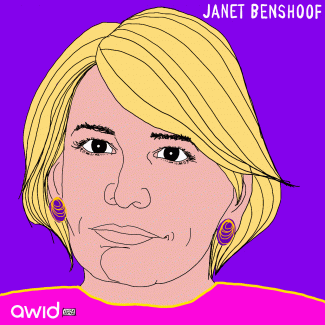
Janet Benshoof was a human rights lawyer from the United States and an advocate for women’s equality, sexual and reproductive rights.
She campaigned to broaden access to contraceptives and abortions across the world, and battled anti-abortion rulings and in the American territory of Guam. She was arrested in 1990 for opposing her country’s most restrictive abortion law, but won an injunction at the local court in Guam that blocked the law and eventually won at the Ninth Circuit Court of Appeals, striking down the law for good.
“The women in Guam are in a very tragic situation. I never intend to be quiet about that.” - Janet Benshoof for People Magazine
Janet established landmark legal precedents including the US Food and Drug Administrations’ approval of emergency contraception, as well as the application of international law to ensure the rights of rape victims in the Iraqi High Tribunal’s prosecution of Saddam-era war crimes.
Janet was President and founder of the Global Justice Center, as well as founder of the Center for Reproductive Rights, the world’s first international human rights organization focused on reproductive choice and equality. She served 15 years as Director of the American Civil Liberties Union’s Reproductive Rights Project, where she spearheaded litigation shaping US constitutional law on gender equality, free speech, and reproductive rights.
“Janet was known for her brilliant legal mind, her sharp sense of humor, and for her courage in the face of injustice.” - Anthony D. Romero
Named one of the “100 Most Influential Lawyers in America” by the National Law Journal, Janet was the recipient of numerous awards and honors.
She was born in May 1947 and passed away in December 2017.
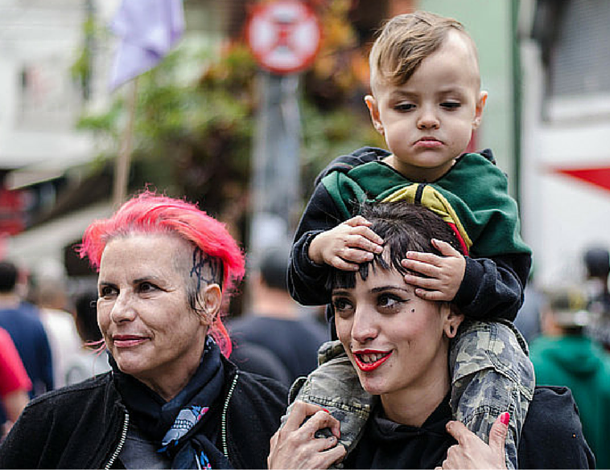
Nació en Bahía, la parte noreste de Brasil. Es inmigrante, activista social y madre de 8 hijxs.
Carmen experimentó la falta de vivienda a los 35 años, después de migrar sola a São Paulo. Esto la llevó a convertirse en una feroz defensora de las comunidades vulnerables, marginalizadas e invisibilizadas más afectadas por la crisis de la vivienda. Eventualmente se convirtió en una de las fundadoras del MSTC en 2000.
Como organizadora política visionaria y líder actual del MSTC, el trabajo de Carmen ha puesto al descubierto la crisis de la vivienda de la ciudad y ha inspirado a otrxs sobre diferentes formas de organizar y gestionar las ocupaciones.
Se mantuvo firme al frente de varias ocupaciones. Uno de ellos es la Ocupación 9 de Julho, que ahora sirve como escenario para la democracia directa y un espacio donde todxs pueden ser cuidadxs, escuchadxs, apreciadxs y trabajar juntos.
Carmen ha sido celebrada durante mucho tiempo por su audacia al devolver la vida a edificios abandonados en el corazón de São Paulo.
¡Si quieres saber más sobre Carmen, puedes seguir su cuenta de Instagram!
Foro de Mujeres sobre Financiación para la Igualdad de Género
Foro de las OSC en la Conferencia Internacional sobre la FpD
Tercera Conferencia Internacional de la ONU sobre la Financiación para el Desarrollo
Our collective power, wisdom, and commitment have no boundaries, but our bank accounts do.
Data snapshots are based on the responses of 1,174 feminist, women’s rights, LGBTQI+, and allied organizations (hereafter referred to as “feminist and women's rights organizations”) from 128 countries to the Where is the Money for Feminist Organizing? survey.
Juli Dugdale fue una feminista australiana que practicaba un liderazgo intergeneracional arraigado en los principios del feminismo, la inclusión y la igualdad. Fue líder, colega y mentora para muchas mujeres, especialmente, para las mujeres jóvenes de todo el mundo.
Juli fue una integrante comprometida del equipo del movimiento Young Women's Christian Association [Asociación Cristiana de Mujeres Jóvenes] (YWCA, por su siglas en inglés), una voluntaria y una ferviente defensora del liderazgo de las mujeres jóvenes por más de 30 años.
Se convirtió en un vínculo fuerte entre el movimiento australiano y la Oficina de la YWCA Mundial. Su confianza en la capacidad de liderazgo de las mujeres jóvenes llevó a establecer una asociación de varios años con el Departamento de Asuntos Exteriores y Comercio de Australia y a la creación del manual Rise Up (Rebélate), una guía global para el liderazgo transformador de las mujeres jóvenes, lanzada en 2018.
Juli falleció en Ginebra el 12 de agosto de 2019.
"Para quienes llegaron a trabajar con Juli, fue un privilegio. Quienes no lo hicieron, pueden tener la certeza de que su legado continúa en el trabajo que hacemos cada día y en la misión del movimiento de la YWCA". - YWCA Australia
"Juli Dugdale siempre ocupará un lugar profundo en el corazón de muchas personas en el movimiento de la YWCA, especialmente aquí, en Aotearoa, y a través del Pacífico. Juli tenía una relación especial con el Pacífico y fue un apoyo increíble para las mujeres jóvenes de allí. Ella era humilde, amable, cariñosa, dedicada, apasionada y tenía un corazón generoso. Ella encarnó la visión de la YWCA de "liderazgo transformador" con una extraordinaria visión y previsión de futuro, y ayudó a empoderar a generaciones de mujeres jóvenes líderes de todo el mundo". - YWCA Nueva Zelanda