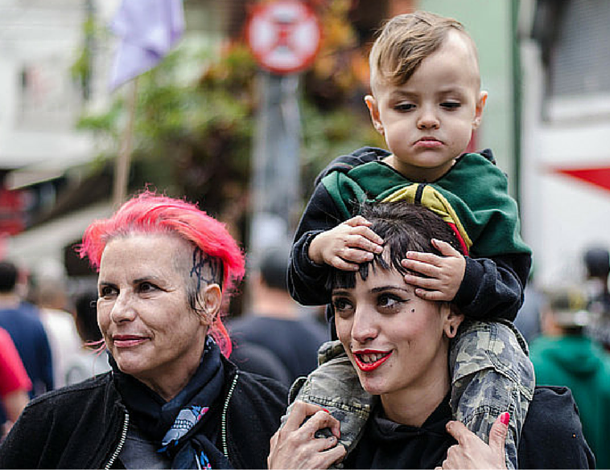
Flickr/Leonardo Veras (CC BY 2.0)

Protection of the Family

The Issue

Over the past few years, a troubling new trend at the international human rights level is being observed, where discourses on ‘protecting the family’ are being employed to defend violations committed against family members, to bolster and justify impunity, and to restrict equal rights within and to family life.

The campaign to "Protect the Family" is driven by ultra-conservative efforts to impose "traditional" and patriarchal interpretations of the family, and to move rights out of the hands of family members and into the institution of ‘the family’.

“Protection of the Family” efforts stem from:

  • rising traditionalism,
  • rising cultural, social and religious conservatism and
  • sentiment hostile to women’s human rights, sexual rights, child rights and the rights of persons with non-normative gender identities and sexual orientations.

Since 2014, a group of states have been operating as a bloc in human rights spaces under the name “Group of Friends of the Family”, and resolutions on “Protection of the Family” have been successfully passed every year since 2014.

This agenda has spread beyond the Human Rights Council. We have seen regressive language on “the family” being introduced at the Commission on the Status of Women, and attempts made to introduce it in negotiations on the Sustainable Development Goals.


Our Approach

AWID works with partners and allies to jointly resist “Protection of the Family” and other regressive agendas, and to uphold the universality of human rights.

In response to the increased influence of regressive actors in human rights spaces, AWID joined allies to form the Observatory on the Universality of Rights (OURs).  OURs is a collaborative project that monitors, analyzes, and shares information on anti-rights initiatives like  “Protection of the Family”.

Rights at Risk, the first OURs report, charts a map of the actors making up the global anti-rights lobby, identifies their key discourses and strategies, and the effect they are having on our human rights.   

The report outlines “Protection of the Family” as an agenda that has fostered collaboration across a broad range of regressive actors at the UN.  It describes it as: “a strategic framework that houses “multiple patriarchal and anti-rights positions, where the framework, in turn, aims to justify and institutionalize these positions.”
 

Related Content

Snippet FEA Linda Porn Bio (ES)

Linda Porn es una otra heroína de la organización sindical feminista y del activismo de las trabajadoras sexuales a nivel nacional (en España) y transnacional.

Originaria de México, vive en España desde los años 2000. Es trabajadora sexual, activista, madre soltera y artista multidisciplinar.

Partiendo de estas diferentes identidades, utiliza la performance, el videoarte y el teatro para visibilizar las luchas en las intersecciones del transfeminismo, el trabajo sexual, la migración, el colonialismo y la maternidad. Combina el arte y el trabajo sexual mientras cuida a su hija como madre soltera.

Linda también pertenece a colectivos de trabajadoras sexuales que luchan por sus derechos, como el sindicato OTRAS y CATS Murcia. También cofundó el grupo 'Madrecitas' - que visibiliza y denuncia la violencia institucional racista contra las familias migrantes. Violencia de la que ella y su hija fueron objeto por ser trabajadora sexual y madre soltera migrante.

¡No te pierdas su trabajo artístico aquí!

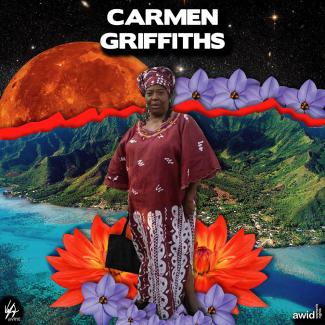
Carmen Griffiths

Carmen encabezaba el Construction Resource and Development Collective (CRDC, Colectivo de recursos para la construcción y el desarrollo) y fue fundamental para apoyar la participación de las mujeres en la industria de la construcción en Jamaica.

También trabajó con mujeres rurales y urbanas en temas relacionados a la preparación para afrontar desastres naturales. Trabajó de manera cercana con mujeres (especialmente madres solteras) enseñándoles cómo usar los cinturones para huracanes y otras tecnologías para poner sus hogares a resguardo. Trabajó en el área de agua y obras sanitarias y fue una fuerte defensora del manejo y desarrollo ambientalmente sustentable.

Fue parte de la Comisión Huairou y realizó incidencia en favor de las mujeres de base en temas vinculados a refugio, energía y medios de vida sustentables.


Carmen Griffiths, Jamaica

Forum anchors (Forum page)

El Foro de AWID estará organizado alrededor de 6 tópicos interconectados. Estos «ejes» se centran en las realidades feministas.

Explora

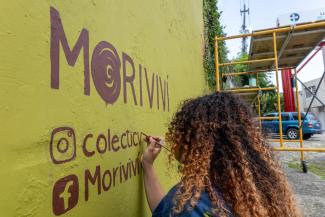
Colectivo Morivivi

Colectivo Moriviví est un collectif artistique de femmes. Notre production artistique comprend du muralisme, du muralisme communautaire et des performances/actions de manifestation. Notre travail consiste à démocratiser l'art et à amener les récits des communautés portoricaines dans la sphère publique afin de créer des espaces où ils seront validés. Nous croyons qu’à travers l'artivisme, nous pouvons promouvoir la sensibilisation aux questions sociales et renforcer notre mémoire collective.

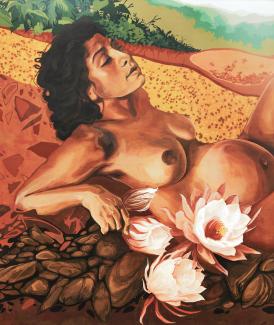
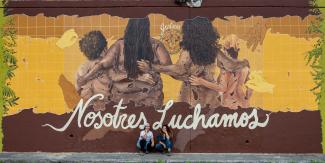
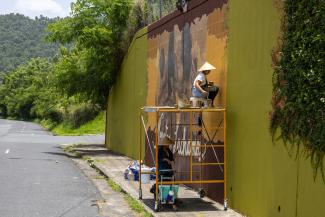
“Cacibajagua” 2017, Mural Project. Jiangxi, China
“Cacibajagua” 2017, Projet mural. Jiangxi, Chine
“Cacibajagua” 2017, Mural Project. Jiangxi, China
“Cacibajagua” 2017, Projet mural. Jiangxi, Chine
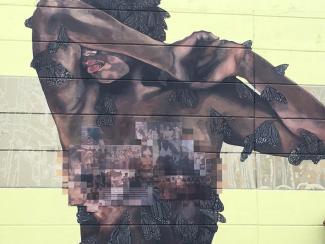
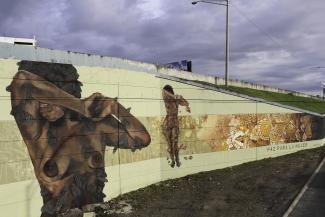
“Paz para la Mujer” 2015, collaboration with Coordinadora Paz para la Mujer Organization. Santurce,
“Paz para la Mujer” (“Paix pour la Femme”) 2015, collaboration avec l’organisation Paz para la Mujer. Santurce, Porto Rico


“Paz para la Mujer” 2015, collaboration with Coordinadora Paz para la Mujer Organization. Santurce, Puerto Rico
“Paz para la Mujer” (“Paix pour la Femme”) 2015, collaboration avec l’organisation Paz para la Mujer. Santurce, Porto Rico
Collectivo Moriri Artwork

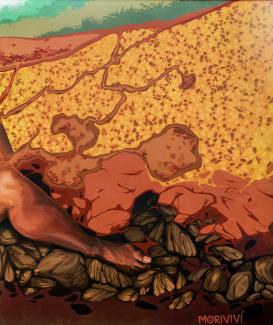
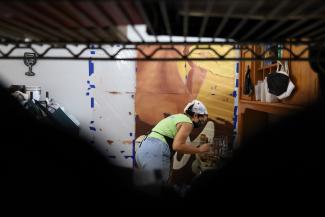
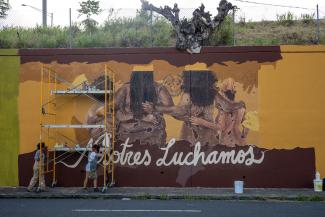
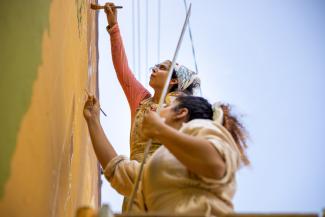
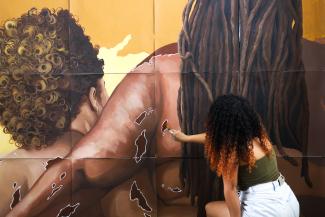
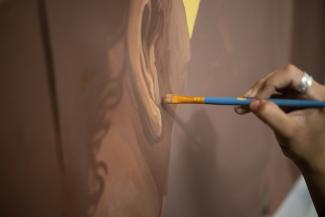
Dans le cadre de sa participation au Groupe de Travail d’Artistes d'AWID, le Colectivo Moriviví a réuni un groupe divers de membres, partenaires et personnel pour faciliter un processus collaboratif visant à imaginer, documenter et déterminer le contenu d'une fresque communautaire par le biais d'un processus de co-création en plusieurs étapes. Le projet a commencé par une conceptualisation à distance avec des féministes de différentes régions du monde réuni·e·s par l'AWID, avant d'évoluer vers sa re-contextualisation et sa réalisation à Porto Rico. Nous avons eu l'honneur de bénéficier de la contribution des artistes locaux·ales Las Nietas de Nonó(@lasnietasdenono), de la participation des femmes locales à la session de peinture communautaire, du soutien logistique de la municipalité de Caguas et du soutien supplémentaire du FRIDA | The Young Feminist Fund.
 
La fresque explore la transcendance des frontières en présentant les corps tels des cartes, dans une étreinte qui met en évidence l'intersection des différentes manifestations, pratiques et réalités féministes.
 
Nous remercions également Kelvin Rodríguez, qui a documenté et capturé les différentes étapes de ce projet à Porto Rico : 

Collectivo Moriri Artwork

À propos du Colectivo Morivivi 

Colectivo Morivivi portrait
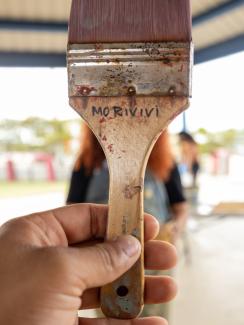
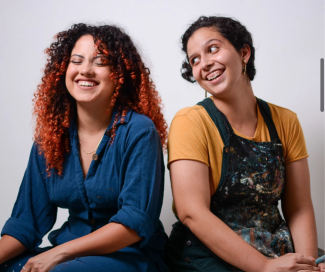
Moriviví est un collectif de jeunes femmes artistes qui travaille sur l'art public depuis Avril 2013. Basé·e·s à Porto Rico, nous sommes reconnu·e·s pour la création de fresques et d'arts dirigés par la communauté.
 
Le groupe a débuté dans les festivals d'art urbain locaux. Au fur et à mesure que notre travail devenait plus populaire, les organisations et les dirigeant.e.s communautaires ont commencé à nous contacter. Au départ, nous étions huit lycéen·ne·s qui voulaient peindre une fresque ensemble. Cependant, en huit ans de travail acharné, nous avons été confronté·e·s à de nombreux défis. Nous sommes aujourd’hui dans une période de transition. Au cours de l'année qui vient, nous souhaitons restructurer le collectif en interne. Notre objectif est d'ouvrir de nouvelles opportunités pour les collaborateurs·trices et d'étayer notre processus de prise de décisions par un nouveau système d'évaluation. À long terme, nous aspirons à devenir une école alternative de pratiques artistiques pour celles et ceux souhaitant s'immerger dans la production artistique communautaire.

Snippet - WITM Why now_col 1 - AR

لماذا الآن؟

A monochromatic orange illustration of a woman with curly hair with her hand on her chin. She seems to inquisitive or posing a question.

تتواجد الحركات النسوية، حركات حقوق النساء، حركات العدالة الجندرية، حركات مجتمع الميم - عين وحلفاءها/ يفاتها في مفترق شديد الأهمية وتواجه هجمات عصيبة على حقوق وحريات حصلت عليها. فتصاعد الاستبداد في الأعوام الأخيرة، وكذلك القمع العنيف للمجتمع المدني وتجريم النساء والأشخاص المتنوعين/ات جندرياً المدافعين عن حقوق الإنسان، تصاعد الحروب والأزمات في الكثير من أنحاء العالم، استمرار الظلم الاقتصادي والتقاطع بين الصحة، البيئة والأزمة المناخية.

Snippet FEA Principles of work Human Rights (FR)

Une personne parlant dans un haut-parleur.

DROITS HUMAINS

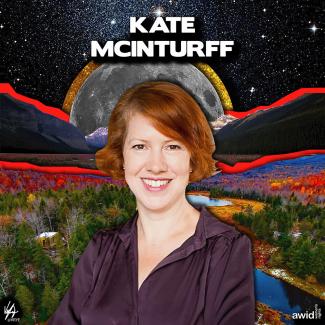
Kate McInturff

Active dans l’organisation Peacebuild, en passant par l'Alliance canadienne féministe pour l'action internationale, Amnesty International et au Centre canadien de politiques alternatives (CCPA), Kate était une passionnée des droits des femmes et de l'égalité de genre qui a consacré sa carrière à lutter contre les inégalités et à faire du monde un lieu plus empathique.

Kate a été membre du comité de coordination de Social Watch et a contribué aux rapports nationaux canadiens de Social Watch. En tant que chercheuse principale du CCPA, Kate a été saluée dans son pays pour ses travaux de recherche, ses écrits et la production du rapport annuel intitulé « Les meilleures et les pires endroits du Canada où vivre en tant que femme ».

Entourée de sa famille, Kate est décédée paisiblement après trois ans de lutte contre le cancer du côlon. Ses proches la décrivent comme une « féministe drôle, sans peur et sans complexes ».


Kate McInturff, Canada

Anti-Rights Trends in Regional Human Rights Systems

Chapter 6

In the African Commission and the Inter-American System, anti-rights actors push essentialist notions of culture and gender to hamper progress on rights and undermine accountability. As we see, anti-rights actors are exerting influence in regional human rights systems, as well as international spaces. 

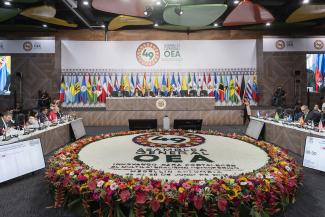
2019 JUN 27 Meeting of the Summit Implementation Review Group in Colombia
© Juan Manuel Herrera/OAS/Flickr
2019 JUN 27 Meeting of the Summit Implementation Review Group in Colombia

The African Commission on Human and Peoples' Rights has begun framing women’s and sexual rights as jeopardising its ability to deal with “real rights” and contrary to “African values”,   setting a worrying anti-rights precedent. The withdrawal of the Coalition of African Lesbians’ observer status is an example of this trend, and points to the way space for feminist, Pan-Africanist engagement is being stifled. 

In the Organization of American States (OAS) and the Inter-American Human Rights System, anti-rights strategies include the NGOization of religious groups, the use of secular discourses, and the co-optation of discrimination frameworks. Anti-rights influence has materialized in a number of ways, including the intimidation of trans activists and the blocking the introduction of progressive language in resolutions.

Table of Contents

  • Silencing Feminists in the African Human Rights System
  • Anti-rights Groups in Latin America: Organization of American States (OAS) General Assembly and the Inter-American Human Rights System
     

Read Full Chapter >

Snippet - WITM RESOURCES - AR

المصادر

(متوفرة باللغة الإنجليزية)

Snippet FEA Story 1 Maps Economies of Care (EN)

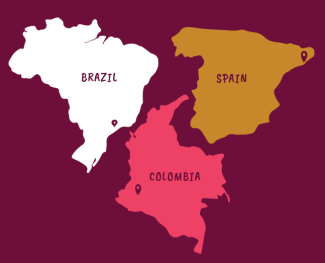
Burgundy background with maps of Brazil in white, Spain in mustard yellow, and Colombia in pink

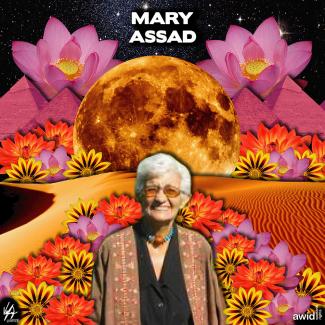
Mary Assad

An expert on social development and anthropologist by training, Mary was best known as a pioneer in the battle against Female Genital Mutilation (FGM).

Born in Cairo Egypt in 1922, Mary’s work in development started early, as she joined the Youth Women’s Christians’ Association (YWCA). Mary was a member of the World Council of Churches and became increasingly concerned with issues regarding women’s health. Her long struggle against FGM proved fruitful in 2008, when Egypt finally criminalized the practice.

She is remembered as a mentor to many Egyptian feminists and activists.


Mary Assad, Egypt

FRMag - My queer Ramadan

My Queer Ramadan 

by Amal Amer

I pray with my family for the first time in six years while wrapped in a keffiyah I scavenged from a dumpster. (...)

Read

artwork: “Angels go out at night too” by Chloé Luu >

Suscríbete para recibir nuestras noticias

* indica un campo requerido
                  
                         
Seleccione los temas sobre los que desea recibir información:

على من يجب تعبئة الاستطلاع؟

المجموعات، المنظمات والحركات التي تعمل خصوصاً وبالأساس على حقوق النساء، حقوق الفتيات، العدالة الجندرية، حقوق مجتمعات الميم - عين وحلفائها/يفاتها في جميع المناطق وعلى جميع المستويات، إن كانت مجموعات جديدة أو قديمة.