WHRDs are self-identified women and lesbian, bisexual, transgender, queer and intersex (LBTQI) people and others who defend rights and are subject to gender-specific risks and threats due to their human rights work and/or as a direct consequence of their gender identity or sexual orientation.
WHRDs are subject to systematic violence and discrimination due to their identities and unyielding struggles for rights, equality and justice.
The WHRD Program collaborates with international and regional partners as well as the AWID membership to raise awareness about these risks and threats, advocate for feminist and holistic measures of protection and safety, and actively promote a culture of self-care and collective well being in our movements.
Risks and threats targeting WHRDs
WHRDs are exposed to the same types of risks that all other defenders who defend human rights, communities, and the environment face. However, they are also exposed to gender-based violence and gender-specific risks because they challenge existing gender norms within their communities and societies.
By defending rights, WHRDs are at risk of:
Physical assault and death
Intimidation and harassment, including in online spaces
Judicial harassment and criminalization
Burnout
A collaborative, holistic approach to safety
We work collaboratively with international and regional networks and our membership
to raise awareness about human rights abuses and violations against WHRDs and the systemic violence and discrimination they experience
to strengthen protection mechanisms and ensure more effective and timely responses to WHRDs at risk
We work to promote a holistic approach to protection which includes:
emphasizing the importance of self-care and collective well being, and recognizing that what care and wellbeing mean may differ across cultures
documenting the violations targeting WHRDs using a feminist intersectional perspective;
promoting the social recognition and celebration of the work and resilience of WHRDs ; and
building civic spaces that are conducive to dismantling structural inequalities without restrictions or obstacles
Our Actions
We aim to contribute to a safer world for WHRDs, their families and communities. We believe that action for rights and justice should not put WHRDs at risk; it should be appreciated and celebrated.
Promoting collaboration and coordination among human rights and women’s rights organizations at the international level to strengthen responses concerning safety and wellbeing of WHRDs.
Supporting regional networks of WHRDs and their organizations, such as the Mesoamerican Initiative for WHRDs and the WHRD Middle East and North Africa Coalition, in promoting and strengthening collective action for protection - emphasizing the establishment of solidarity and protection networks, the promotion of self-care, and advocacy and mobilization for the safety of WHRDs;
Increasing the visibility and recognition of WHRDs and their struggles, as well as the risks that they encounter by documenting the attacks that they face, and researching, producing, and disseminating information on their struggles, strategies, and challenges:
Mobilizing urgent responses of international solidarity for WHRDs at risk through our international and regional networks, and our active membership.
Related Content
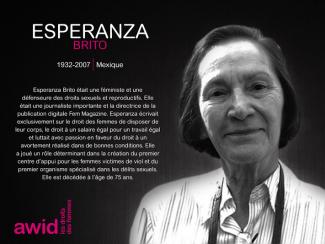
Mexican WHRDs
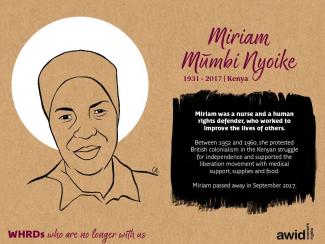
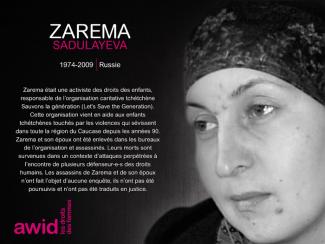
The data from our tribute indicate that Mexico is a particularly dangerous country for defenders. Out of the 12 Mexican Women Human Rights Defenders (WHRDs) we commemorate in this years’ Tribute, 11 were murdered. They were journalists, women’s rights advocates, trans* rights and social activists. Join us in remembering and honoring these WHRDs, their work and legacy by sharing the memes below and tweeting by using the hashtags #WHRDTribute and #16Days.
Please click on each image below to see a larger version and download as a file
This is Mariama Sonko, an inspiring small-scale rural farmer, eco-feminist and a woman human rights defender.
She lives in Niaguiss, a town in the southwest of Senegal. Growing up in a family and community of rural farmers, she witnessed the essential role of women in food production and seed preservation from a very early age, while also being immersed in the rhythms and working of the land. Mariama has been defending local agricultural knowledge and peasant practices since the 1990s. As a mother of five children, the food she grows herself is the main source of sustenance for her family.
She is currently the president of “Nous Sommes la Solution'' and is involved in promoting agroecological practices and family farming, encouraging food sovereignty, biodiversity and farmer seed preservation, and demanding equitable access to resources and land for women across West Africa.
Source: AWID’s Feminist Realities Festival Crear | Résister | Transform - Day 2/ 2ème jour/ 2º día
Notre objectif est de recueillir 2 000 réponses à l’enquête, soit près du double de la dernière enquête WITM de 2011.
Defensoras del África subsahariana
En nuestro Tributo Virtual 2015 a las defensoras de derechos humanos que ya no están con nosotros/as recordamos a cuatro mujeres del África subsahariana, tres de las cuales fueron asesinadas por el trabajo que realizaban y/o por su identidad de género y orientación sexual. Sus muertes ponen en evidencia la violencia que suelen enfrentar las personas LGBT en la región y en el mundo. Únete a AWID para honrar a estas defensoras de derechos humanos, su trabajo y su legado, compartiendo los memes aquí incluidos con tus colegas, amistades y redes; y tuiteando las etiquetas #WHRDTribute y #16Días.
Por favor, haz click en cada imagen de abajo para ver una versión más grande y para descargar como un archivo.
Основываясь на 20-летней истории привлечения более объемного и качественного финансирования для достижения социальных изменений под руководством феминисток(-ов), AWID приглашает вас принять участие в новом опросе:
Пожалуйста выберите язык, на котором вы хотите отвечать на вопросы в правом верхнем углу страницы
Why and how to renew your AWID membership
Meet Other Members
Our individual and institutional members come from ALL regions of the world and 163 countries. Our latest members join us from France, South Sudan, the United Kingdom, and Lebanon. All of our members bring with them a rich and diverse array of perspectives, experiences, knowledge, energy and inspiration!
Did you know about our weekly member profiles?
One of the benefits of being an AWID member, is having your story featured on awid.org, in our newsletters which go out to 35,000 subscribers, and via our social media channels which have over 60,000 followers.
If you have any difficulties and require support with the sign-up process, please do not hesitate to contact us at membership@awid.org
What Our Members Say
"We have found AWID to be a very exciting network and we are involved in many of its platforms." - Engabu Za Tooro (AWID institutional member)
"I am looking forward to a fruitful engagement with the team. Feeling great. Thanks for accepting me as a member." - R. Chakraborty (AWID individual member)
"Thank you so much AWID, your work is tremendous. I really appreciated your efforts." - E. Khan (AWID individual member)
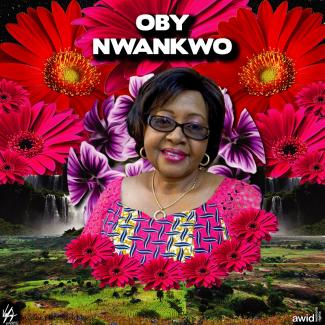
Avec une carrière juridique de plus de 30 ans à son actif, Oby était connue en Afrique et dans le monde comme une ardente défenseure de la justice de genre et des droits humains.
Elle a fondé le Centre de documentation et de développement des ressources civiles (CIRDDOC), une ONG nigériane qui sponsorise des formations et des activités de mise en réseau qui promeuvent les droits humains, la bonne gouvernance, l’accès à la justice et l’État de droit pour les membres de la société civile, les parlementaires, ainsi que d’autres parties prenantes concernées.
Au Nigeria, les activistes se souviennent d’Oby avec émotion, la qualifiant « d’activiste extraordinaire qui a fait preuve d’énergie et de passion pour lutter pour l’égalité de genre et la justice de genre au Nigéria et en Afrique »
Para reivindicar o seu poder como especialista sobre o estado dos recursos de movimentos feministas;
7. Sintetiza los resultados de la investigación
Ahora que has analizado toda la información que recogiste — de la encuesta, las entrevistas, la investigación secundaria y otras fuentes que hayas utilizado — ya puedes generar el producto final.
En esta sección:
El producto final
1. Escribe con claridad
2. Consigue que tenga un aspecto atractivo
El producto final será un documento que resume, analiza y critica la información que obtuviste. Será lo que compartas con la audiencia cuando les presentes tu investigación y se la expliques.
En AWID por lo general elaboramos un informe escrito exhaustivo en el que analizamos cada conjunto de información y sintetizamos todos los resultados que encontramos, para luego generar productos más breves como infografías o resúmenes (que explicaremos en la sección siguiente, «Finalización y formato»).
1. Escribe con claridad
Organiza la información según cómo te gustaría contar la historia. Puedes respetar el orden de la encuesta. O reagrupar algunas preguntas para que la conclusión surja de manera fluida y siga una progresión lógica.
Adapta el lenguaje al público. Utiliza un lenguaje universal y evita las jergas o los términos demasiado técnicos.
La importancia de la edición
El trabajo de edición implica corregir el texto, garantizar que la redacción sea concisa, revisar que los datos proporcionados sean exactos, señalar las inconsistencias que se deben resolver, acomodar el texto para que fluya y posiblemente también sugerir títulos.
Lo ideal es que la persona que haga este trabajo entienda y conozca tu labor en cuanto a WITM pero que no haya participado directamente de la investigación, así puede aportar una perspectiva nueva.
2. Consigue que el producto tenga un aspecto atractivo
Utiliza la información recogida para generar gráficos y tablas. Estas herramientas visuales constituyen una forma atractiva de subrayar los principales resultados de la investigación y validar los análisis.
Busca imágenes relevantes que puedan ilustrar el informe.
Destaca las principales cifras y/o los testimonios de impacto.
Recuerda: Cuanto más accesible sea el producto, más personas querrán leerlo (y compartirlo).
Cuando llegues a este momento, ya habrás compilado toda la información, la habrás analizado y convertido en un producto final, que probablemente sea un informe extenso.
1. Pule los resultados
Antes de encarar los pasos siguientes deberías compartir el producto final con organizaciones, activistas y donantes que puedan comentarlo (lxs «consultorxs»).
Este es un momento excelente para pedirles que revisen lo siguiente:
¿Hay algo fundamental que esté ausente delanálisis del panorama actual del financiamiento y sus tendencias?
¿Hay algo fundamental que esté ausente de las conclusiones?
¿Hay alguna inexactitud en la información que necesite ser corregida?
¿Tienen alguna sugerencia general sobre cómo fortalecer el informe para que cumpla con las metas que habías mencionado en el marco de la investigación?
Una vez que hayas incorporado todos los comentarios de las personas a las que consultaste, asegúrate de que la persona a cargo de la edición vuelva a revisar el informe.
Con esto ya tendrás la versión final y completa del informe. Si quieres publicarlo en otros idiomas, ahora es el momento de enviarlo a traducir.
2. Facilita los comentarios
Es probable que las personas a las que consultes estén ocupadas con su trabajo habitual. Asegúrate de darles un plazo razonable para que te hagan llegar sus comentarios.
Pídeles comentarios breves y específicos, para que les resulte fácil responder. Si quieres, puedes simplemente copiar y pegar los puntos que mencionamos en la sección anterior.
Si vas a publicar el informe en varios idiomas, asegúrate de contar con personas que también puedan revisar las versiones finales traducidas de el/los producto/s.
Las personas que revisen el informe (lxs «consultorxs») te estarán haciendo un aporte significativo. Considera la posibilidad de otorgarles alguna forma de reconocimiento.
• 1 persona (o más) de investigación
• 1 Editor (editor web o si crea un producto en línea)
• Traductores (si ofrece encuesta en varios idiomas)
Recursos necesarios
• Lista de organizaciones de asesores, activistas y financiadores.
• Documento de Síntesis (sección de "marco de su investigación")
• Los resultados de su(s) encuesta(s)
• Preguntas de la entrevista
• Resultados de las entrevistas
• Los datos de la investigación secundaria
• Todos otros datos utilizados en el informe
We ramped up preparations for the 13th AWID international Forum, focused a lot of energy on the Post 2015 Development Agenda and Financing for Development processes, and continued the core work of our priority areas:
We continue witnessing the rapid breakdown in democracy and democratic institutions, with spaces for dissent shrinking.
Multiple and concurrent systemic crises (energy, food, finance and climate) continue to deepen inequalities and pose major challenges.
Corporations are a leading power in determining the development agenda.
Violence against WHRDs remains an urgent problem.
Religious fundamentalisms are pervasive and increasingly powerful.
New forms of online gender-based violence have emerged.
In response, we are moving out of our silos.
Increasingly, women’s rights and other movements worldwide are articulating the systemic and intersectional nature of these and other problems. We are making better connections with the agendas of other social and environmental movements for solidarity, alliance building and collective responses. We are also seeing greater visibility of these movements fighting for justice on the ground.
Our Impact
For effective strategizing and advocacy, we need facts
To exchange knowledge and join hands in solidarity, we need a strong online community
To build our collective power, we need to work together
To influence international processes, we need to increase our access and voice
To reposition power we need to give visibility and emphasize the important role that feminist and women’s rights movements are already playing
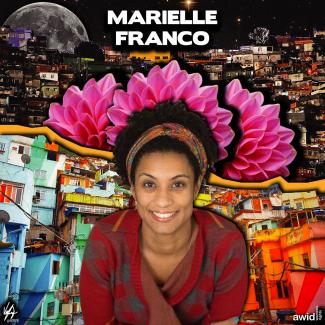
Marielle was a Brazilian politician, feminist, lesbian and human rights activist.
Marielle was an outspoken critic of police brutality and extrajudicial killings. Her openly feminist, Black and favela-centered politics were a source of hope for marginalized groups in Rio de Janeiro, currently governed by a conservative city government and an evangelical mayor.
On March 14, 2018, after delivering a speech in Rio de Janeiro, Franco and her driver were shot multiple times and killed. Following news of her death crowds took to the streets shouting "Marielle presente!" (Marielle is here!) and demanding justice be done.